

D major is the key the guitar was arguably built for. The open D, A and G shapes sit under the hand, the bottom two strings ring underneath almost anything you play, and a huge amount of folk, country and rock lives here for exactly that reason.
This page covers what the key gives you, then the songs. The chord family charts lay out the same information for all twelve keys.
The chords D major hands you
D major, E minor, F sharp minor, G major, A major, B minor and C sharp diminished.
Four of those are comfortable open shapes. The two that stop people are F sharp minor and B minor, both barres, and both common enough in this key that avoiding them limits what you can play. A B minor on the top four strings is a reasonable substitute while the hand builds up.
Why so many D songs use a C chord
A C major chord does not belong in D major. Its C natural is a flat seventh, and the key wants C sharp. Yet the move from D to C to G turns up constantly in rock, and it is one of the most recognisable sounds on the instrument.
That is D Mixolydian rather than D major. Same home note, one note different, and the difference is exactly what makes those songs sound the way they do. Several entries below sit there rather than in strict D major, and each one says so. The shapes under your hand are the same either way, so it changes nothing about how you play them and quite a lot about why they work.
Songs in D major
Each entry says what the song asks of you rather than just naming it. Where a song is Mixolydian, or where sources genuinely disagree, that is stated rather than smoothed over.
With or Without You by U2

Four chords, D, A, Bm and G, cycling from start to finish. Nothing in the fretting hand is hard. What makes it hard is restraint.
The arrangement stays quiet for a long stretch, so the strumming has to be even and small before it finally opens up at the end. Learn it as a dynamics exercise rather than a chord exercise. The Edge’s sustained lead comes from an Infinite Guitar rather than picking technique, so there is no point chasing it with a plectrum.
With or Without You Guitar Chords
Where the Streets Have No Name by U2

The intro is a six note pattern over D, G, Bm and A, with a C chord closing the cycle. Played dry it sounds like a plain arpeggio. The shimmer on the record comes from a dotted eighth delay filling in the notes you never actually play, which means your timing has to be strict, because the repeats expose any drift immediately.
Standard tuning, no capo. A good lesson in how an effect can be part of the part rather than a coat of paint over it.
Where the Streets Have No Name Guitar Chords
Everybody Hurts by R.E.M.

Two chords carry the verse, D and G, with Em and A underneath the chorus. It is picked rather than strummed, in 6/8, at a very slow tempo. That is the difficulty.
Holding a compound time arpeggio steady without creeping faster takes more discipline than most beginner strumming songs ask for. The bridge brings in F sharp major, Bm, C, G and Am, borrowed colour rather than a key change. Standard tuning, no capo, and one of the gentler ways into fingerstyle.
Hey There Delilah by Plain White T’s

The verse is D and F sharp minor, repeated. The turnaround adds Bm, G and A. That is genuinely the whole song, which makes it one of the quickest entries here to get sounding like the record.
The work sits in the picking hand, keeping a steady pattern going under a long vocal line without stumbling at the chord change. F sharp minor can be a full barre or the smaller four string shape rooted on the D string. D moving to iii is a pairing beginners rarely meet.
Hey There Delilah Guitar Chords
Thinking Out Loud by Ed Sheeran

Almost everyone plays this with a capo at the second fret using C shapes, which lands you in D. The sounding chords are D, D/F sharp, G and A, with Bm and Em arriving later. The chord changes are slow.
The feel is not. Your right hand has to sit into a lazy, slightly swung groove with muted percussive strokes mixed into the strum, and the walking bass note under D/F sharp needs to land cleanly every time. A clear case of a capo transposing the key rather than disguising it.
Thinking Out Loud Guitar Chords
Castle on the Hill by Ed Sheeran
Same chord family as With or Without You, D, A, Bm and G, plus a D/F sharp and an A7sus4, but at a much faster clip. The record uses partial voicings on the top strings rather than full barre shapes, which is both easier for a learner and closer to the actual sound.
The chorus is a stamina test more than a technical one. Keep the driving strum going without letting the wrist tighten up and the song largely plays itself.
Castle on the Hill Guitar Chords
What I Got by Sublime

Two chords, D and G, all the way through. The chords are not the point. The offbeat upstrokes are, muted and clipped, with the downbeats left empty.
Play it as an ordinary strum and it stops being the song entirely. This is the best thing on the list for drilling ska rhythm, precisely because the fretting hand is free to do almost nothing while the right hand does all the work. The melody and lead lines lean on a natural C, which gives it a Mixolydian flavour.
Midnight Rider by The Allman Brothers Band

Retune the low string down to D before you start. The verse sits close to a riff over a droning open D, and the chorus moves through Gm7 and C to get back home. That Gm7 is the surprise, a minor chord turning up where a major sounding song does not expect one, and the instrumental break leans further out with C and B flat.
Getting the loose, behind the beat feel matters more here than note perfect accuracy. The flat seventh and flat sixth make this Mixolydian rather than straight D major.
Bad Moon Rising by Creedence Clearwater Revival

Three chords, D, A and G, and no capo. The catch is the change speed. In the verse the A and the G get two beats each, so you are moving between shapes faster than the relaxed feel suggests, and rushing that move is where most players come unstuck.
The chorus opens on G before dropping home. Underneath all of it sits a swung honky tonk boom chuck that carries the song. About as clean an example of I to V to IV in D as exists.
Proud Mary by Creedence Clearwater Revival

The verse sits on a single D chord, so all the interest has to come from your right hand. The intro is where the work is: a syncopated chordal riff running C, A, G and F down to D, and if that descent does not land the whole thing sags.
The chorus brings in Bm, probably the first real barre chord in a song otherwise built from open shapes. Those C and F chords are borrowed from outside the key rather than evidence of a mode, because the A chord still carries its C sharp.
American Girl by Tom Petty and the Heartbreakers

Standard tuning, no capo, and the main move is D to A to G to A, with Bm turning up as well. The chord that makes it interesting is the E major, which sits outside the key and works as the dominant of the dominant, pulling hard into A. Learn what that sounds like and you start hearing it everywhere.
The shapes are beginner level. The Bo Diddley derived strum is not, and it is the strum that makes the record sound like the record.
Substitute by The Who

Townshend keeps a D in the bass while the chord above it moves, giving D, A/D and G/D rather than plain D, A and G. Play the ordinary open shapes and you lose the entire sound. His voicings are small three string shapes higher up the neck, not campfire chords.
The bridge drops to Em and G and stays diatonic. Standard tuning, no capo, no key change anywhere. The best example on this list of what a bass note that refuses to move does to otherwise ordinary chords.
More Than a Feeling by Boston

The verse riff centres on D with a C chord alongside it, and the chorus leans towards G with a D/F sharp bass walk, so this one is D centred rather than a textbook D major. The intro is a twelve string acoustic arpeggio, which is worth knowing before you wonder why your six string sounds thin.
Getting that figure clean at tempo is the real job. Scholz’s solo uses ornaments closer to baroque playing than to rock, which is part of why it stands out.
More Than a Feeling Guitar Chords
Going to California by Led Zeppelin

Tune both E strings down a whole step to double drop D. No capo, whatever some lesson sites claim. The verses run G, Gmaj7 and G6 into D and Dsus4, and the retuning turns those ordinary shapes into ringing, drone backed voicings.
Travis style picking has to stay steady while the fretting hand works the descending line, and your pinky handles melody notes on the second string. The bridge flips to D minor, which is borrowing from the parallel minor rather than leaving the key. The record also carries mandolin.
Going to California Guitar Tabs
Thank You by Led Zeppelin

The progression is D, C, G and back to D, and that C is a structural flat seventh rather than passing colour, which puts the song in D Mixolydian. Standard tuning, no capo. The intro is picked, with a descending figure on the top string while the bass note walks down from D through C to B, so the trick is keeping the top two strings ringing untouched while the low end moves.
A Bm barre waits in the bridge. Page’s solo plays C sharp against that C, and the friction is deliberate.
Stuck in the Middle with You by Stealers Wheel

The verse runs D, G, A and then a C before returning, so you get a flat seventh and a working major dominant living in the same song. That is different from true Mixolydian, where the C would replace the A rather than sit beside it. Standard tuning, no capo, despite claims elsewhere about altered tunings.
The hook is the finger lift wiggle on the held D chord, moving through D7 and D6 without changing shape. The strum is loose and swung, and very easy to play stiffly.
Stuck in the Middle with You Guitar Chords
Twist and Shout by The Beatles
Three chords and a seventh, D, G, A and A7, looping with no bridge at all. Nothing about the shapes will trouble you. Playing relentless eighth notes at around 130 beats per minute for the length of the song will, and that is a real obstacle for a beginner’s right arm.
The famous build before the last chorus climbs chromatically from B flat up into D, and landing that crescendo exactly on the beat is the skill worth practising. A7 is simply A with one finger lifted.
Eight Days a Week by The Beatles

The chords are D, E7, G, A, Bm and Em, with slash voicings holding a D in the bass. The lesson is the E major on the third beat of the first bar. Every instinct says E minor.
It is not, and the clash between its G sharp and the G naturals around it is exactly why the song sounds the way it does. Use an open D arrangement rather than a capo 2 version in C shapes, which sounds identical but teaches you the wrong key. It also fades in, so practise swelling over four bars without drifting.
Eight Days a Week Guitar Chords
Dear Prudence by The Beatles
Almost every chord here is a D with one voice moved: D, D/C, G/D, D/B and A/D. The inner line walks down chromatically while the top D and A ring on untouched, so this is a thumb independence exercise more than a chord exercise. The picking pattern must not stutter.
Those C naturals in the descending line are structural, which is why the more precise analyses call it D Mixolydian rather than plain D major. Learn the device and you have half learned Something and Michelle as well.
Sweet Jane by The Velvet Underground

A fully diatonic loop of D, A, G and Bm, then a chorus that rocks between D and G. Only the Bm asks for a barre. The record uses barred voicings around the fifth fret, but that is voicing rather than a different key, and open shapes sit in exactly the same place.
Difficulty here is entirely feel, two guitars slightly out of phase with each other and sitting behind the beat. Stick to the 1970 album version, because the live Rock n Roll Animal recording is in E and will not match.
Brain Damage by Pink Floyd

The verse is a D pedal with chords sliding over the top of it, D, G7/D, E/D, A7 and home again. Those slash chords are easy top string grips. The work is in muting the lower strings so the open D speaks cleanly underneath.
The chorus brings in a C natural, which is not a flat seventh but the fourth of a brief move towards G, and the C sharp stays present throughout the verse. The trickiest bar is the D, Dsus2, D7 and D7sus2 shuffle closing the second verse.
Us and Them by Pink Floyd

Not a simple strummer. The verse is one shape moving up the neck over a fixed open D bass, giving Dsus2, Esus2/D, a D minor major seventh and G/D. Holding a stretched grip around frets seven to ten while the open D rings and the two lowest strings stay silent is genuinely difficult, and the slow tempo exposes every inconsistency in the strum.
The tonic chord has no third in it, which is why people mishear this as B minor. The cadences plant a C sharp and settle the question.
Dead Flowers by The Rolling Stones

Three chords, D, A and G, with a Dsus4 and Dsus2 wiggle after each title line. There is no C natural anywhere, so this is plainly diatonic. Standard tuning and no capo.
Any chart you find headed capo four is a singer’s transposition rather than what is on the record. The difficulty is the country groove, a swung strum with the chorus accented on two and four, and rushing it flattens the whole thing. The solo runs D major pentatonic with an added G, which is a cheap and very effective country sound.
Heroes by David Bowie

The verse is D and G, repeated. That is it, and it may be the easiest genuinely great song you will ever learn. Nothing in the fretting hand is difficult.
Holding a two chord strum for six minutes while the intensity keeps climbing is another matter, and that is the actual work. The hook sits on C, G and D, and since there is no C sharp anywhere in the harmony this is D Mixolydian rather than D major. Fripp’s lead is sustained feedback from standing at measured distances from a speaker, so treat it as texture.
Crazy Little Thing Called Love by Queen
The hammer on and pull off between D and Dsus4 over a ringing open D is the song. Get that rhythmic and everything else follows. The turnaround runs D, B flat, C and home, and both the B flat and the C are structural, which makes this Mixolydian rather than straight major.
Barres on B flat and F7 are the first real obstacle, then the chromatic descending break, then a solo built on country bending. Mercury wrote and played it on acoustic knowing only a handful of chords, which is worth telling a nervous learner.
Crazy Little Thing Called Love Guitar Chords
If I Fell by The Beatles
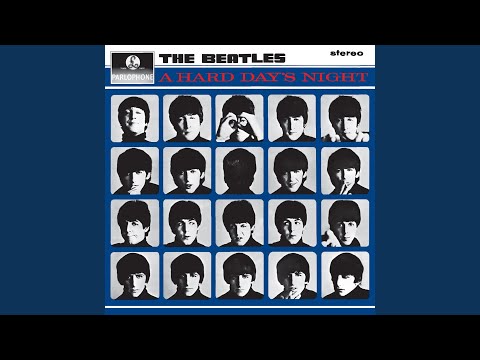
The body of the song is in D, running D, Em, F sharp minor, then an F diminished seventh back to Em and A. The intro is somewhere else entirely, starting in D flat major and lifting into D through an Em to A. That shift is the reason the song sounds like it is arriving rather than simply starting.
The diminished chord is the thing worth stealing, a movable chromatic connector that carries you from F sharp minor down to Em. A borrowed Gm turns up in the turnaround.
Blowin’ in the Wind by Bob Dylan

Dylan plays this with a capo at the seventh fret using G, C and D shapes, which sounds in D. Be clear about that, because the shapes under your fingers are not the key you are in. Standard tuning otherwise.
Three chords, a steady strum and no surprises anywhere in the harmony make it close to the gentlest entry point here. What it really teaches is capo arithmetic, and how to keep a plain accompaniment from turning into a plod behind a long vocal line.
Blowin’ in the Wind Guitar Chords
Harvest Moon by Neil Young
Drop the low string to D, and leave the capo off. The verse moves through D, D6 and Dmaj7, which is really one shape with a finger lifting and returning, then reaches out to G6, Em7 and A7sus4. Those extended chords are easier than their names suggest and they are the entire sound of the record.
The difficulty sits in the right hand, a brushed pattern at a slow tempo that has to stay soft and even. Playing quietly for five minutes is harder than it sounds.
Old Man by Neil Young

Standard tuning, despite what people assume from the double drop D of other Neil Young songs. The chords are D, F, C, Am7 and Em7, and that C and F are a flat seventh and a flat third, so the harmony carries more colour than a plain D major would. Sources split on what to call it, and both readings hold up.
The picking is open and ringing rather than fast. Keeping the pattern steady while the vocal phrasing floats loosely across it is the actual work.
Margaritaville by Jimmy Buffett

D, A and G with a D7 and a Dsus2, and no C anywhere, so the harmony is straightforwardly diatonic. The chords are beginner level and the tempo forgiving. What makes it worth the time is arrangement sense, because the song is built almost entirely on space and a heavy strum flattens it within a bar.
Practise leaving gaps and letting chords ring. That small D to Dsus2 movement between vocal lines is the closest thing to a lick, and it costs you one finger.
Where to go next
D is a step away from open D tuning, where the open strings form the chord itself. The open D songs page covers that, and drop D is the smaller change that keeps standard tuning on five strings.
And keep playing. The barre chords come with time and almost nothing else.

Recent Posts
Neural Amp Modeler, or NAM, is a free program that copies real guitar amps and pedals. Someone records a real amp, a neural network learns exactly how it responds, and you play your guitar through...
Rocksmith turned practice into a game you played with a real guitar. Then in October 2023 Ubisoft pulled Rocksmith 2014 from every store because its music licences had run out. It came back on Steam...